The Ultimate Guide to Keto Baking: Flours, Sweeteners, and Foolproof Swaps
Let’s be completely honest for a second. When you first start a low-carbohydrate lifestyle, giving up pasta is tough, but giving up cookies, cakes, and fresh bread can feel impossible. I’ve been there. You stare at your coffee and desperately wish you had a muffin to go with it. The good news is that keto…
Let’s be completely honest for a second. When you first start a low-carbohydrate lifestyle, giving up pasta is tough, but giving up cookies, cakes, and fresh bread can feel impossible. I’ve been there. You stare at your coffee and desperately wish you had a muffin to go with it. The good news is that keto baking is entirely possible, and it has revolutionized the way we enjoy treats.
I’ve spent years analyzing nutrition labels, testing alternative flours, and understanding blood sugar responses. Today, I am going to show you how to recreate your favorite baked goods without the insulin spikes or the carb crashes. From picking the right sweeteners to understanding fat ratios, here is everything you need to know.
What Ketogenic Baking Actually Means
Before we preheat the oven, we need to talk about the science of ketogenic baking.
Standard baking relies on wheat flour and sugar, which flood your body with glucose. On a ketogenic diet, your primary goal is to keep your net carbs between 20 to 50 grams per day. This restriction forces your body to exhaust its glucose reserves and switch to burning fat for fuel, producing ketones in the liver.
Therefore, baking for this lifestyle means exclusively using ingredients that do not trigger a massive insulin response. We achieve this by replacing high-carb grains with high-fat nut and seed flours, and swapping traditional sugar for natural, non-caloric sweeteners.
The Best Keto Flours for Low Carb Baking
When you step into low carb baking, you have to throw out everything you know about all-purpose wheat flour.
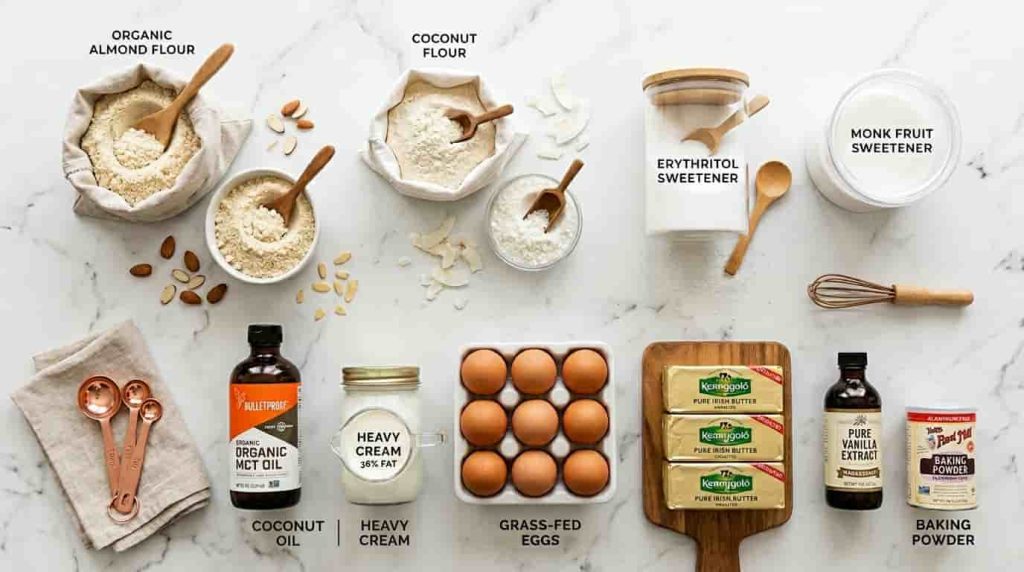
Almond Flour: The Gold Standard Blanched almond flour is the absolute workhorse of the low-carb kitchen. It is made from finely ground, skinless almonds. Nutritionally, it is exceptional. Just 100 grams of almond flour provides about 21 grams of complete protein and is packed with healthy monounsaturated fats. It adds beautiful moisture and a tender crumb to baked goods, making it perfect for cookies and pie crusts.
Coconut Flour: The Thirsty Alternative Coconut flour is another fantastic, extremely low-carb option. However, it behaves very differently. It acts like a sponge. You cannot swap it 1:1 with almond flour.
What to Avoid: The Chickpea Trap Many “gluten-free” or “healthy” baking recipes call for chickpea flour (gram flour). Do not use it! While it has the same 21 grams of protein as almond flour, a single cup of cooked chickpeas contains an astonishing 45 grams of carbohydrates. It will kick you out of ketosis instantly.
Sweet Success: Best Sweeteners for Keto Friendly Baking
Finding the right sweetener is the secret to keto friendly baking. You want something that tastes like sugar but has a glycemic index of zero.
The Winners: Erythritol, Stevia, and Monk Fruit These three are your best friends. They are naturally derived and have virtually zero impact on your blood glucose. Erythritol provides a slight cooling sensation, while monk fruit is incredibly sweet without any bitter aftertaste.
The Rising Star: Allulose If you want to make caramel, marshmallows, or soft ice cream, you need Allulose. It is about 70% as sweet as table sugar, but it has a massive advantage: it actually bakes, browns, and freezes just like real sugar without crystallization.
The Danger Zone: Maltitol and IMOs Read your labels! Many commercial “sugar-free” baking mixes use Maltitol. Maltitol is a sugar alcohol that is 75-90% as sweet as sugar, but it is partially absorbed by the bloodstream and can spike your blood sugar significantly. It is also notorious for causing terrible stomach cramps and gas. Similarly, avoid Isomaltooligosaccharides (IMOs), which are often falsely marketed as indigestible fiber but actually raise insulin levels.
Fat and Liquid Ratios in Baking Keto
Baking keto means you are dealing with ingredients that lack gluten. Gluten is what makes traditional bread stretchy and cakes fluffy. To compensate, we rely heavily on fats and eggs for structure and moisture.
- The Power of Heavy Cream: Instead of regular milk, use Heavy Whipping Cream (HWC). It is exceptionally high in fat and contains only about 1 gram of net carbs per ounce (30 ml).
- Canned Coconut Milk: For dairy-free baking, use full-fat canned coconut milk (not the watery stuff in cartons). It contains 2-4 grams of net carbs per half-cup and adds incredible moisture and richness to cakes and breads.
- Butter and Oils: Grass-fed butter (like Kerrygold) and MCT oil or coconut oil are essential. They not only provide flavor but help bind heavier flours (like almond flour) together. Since almond flour absorbs a lot of liquid, recipes generally require more eggs and fat than standard baking.
Common Mistakes to Avoid
Even seasoned bakers make these critical errors when starting out:
- Using Regular Cow’s Milk: You might think a splash of whole milk is fine, but one cup contains 12 grams of sugar (lactose).
- Using Oat Milk: Oat milk is essentially “grain juice.” The enzymes break oat starches down into pure sugar, pushing the carb count to 14-17 grams per cup.
- Trusting “Sugar-Free” blindly: Always check the ingredient panel for Maltitol or Dextrose (which is literally just pure glucose).
Easy Beginner Swaps
Ready to adapt your old recipes? Here is your quick cheat sheet:
- Swap Sugar for: An Erythritol and Monk Fruit blend (1:1 ratio).
- Swap Wheat Flour for: Blanched Almond Flour (You may need to add an extra egg for binding).
- Swap Cow’s Milk for: Unsweetened Macadamia Nut Milk (0-1g net carbs per cup) or Unsweetened Almond Milk.
FAQ
Can I use Xylitol in my baking? Yes, Xylitol tastes very similar to table sugar. However, be incredibly careful: it is highly toxic and potentially fatal to dogs and other pets. Keep your baked goods safely stored away from furry friends.
Is honey or agave allowed? No. Natural sweeteners like honey, agave nectar, and maple syrup are strictly prohibited. They are packed with fructose and carbohydrates and will immediately disrupt ketosis.
Can I use chickpea flour or oat flour? Absolutely not. Chickpeas and oats are high-starch, high-carbohydrate foods that are fundamentally incompatible with this lifestyle. Stick to nut and seed flours.
Next Steps for Your Kitchen
You do not have to live a life deprived of joy, celebrations, or delicious desserts. By understanding which flours behave best and which sweeteners keep your blood sugar stable, you can master keto baking in no time. The key is simply stocking your kitchen with the right ingredients from day one.