Low-Carb Baking vs Keto Baking: Key Differences, Ingredients and Carb Targets
Giving up your favorite breads, cookies, and muffins is arguably the hardest part of transitioning to a healthier lifestyle. You want to enjoy a warm treat from the oven, but you definitely don’t want to spike your insulin and ruin your progress. This is where low carb baking enters the picture. However, if you are…
Giving up your favorite breads, cookies, and muffins is arguably the hardest part of transitioning to a healthier lifestyle. You want to enjoy a warm treat from the oven, but you definitely don’t want to spike your insulin and ruin your progress.
This is where low carb baking enters the picture. However, if you are browsing recipes online, you will quickly notice that “low-carb” and “keto” are often used interchangeably. As an ingredient decoder who analyzes nutrition labels for a living, I can tell you they are absolutely not the same thing.
The flours you use, the sweeteners you choose, and the exact carb targets vary wildly between the two. Let’s break down the key differences, the best ingredients, and how to master the art of baking without the sugar crash.
Definitions and Carb Targets: Drawing the Line
To understand the difference in the kitchen, we first need to understand the math behind the diets.
- The Keto Target: A classic ketogenic diet is extremely restrictive. The goal is to force your body into a metabolic state called ketosis. To do this, you typically must consume less than 20 to 50 grams of net carbs per day, which accounts for only 5% to 10% of your total daily calories.
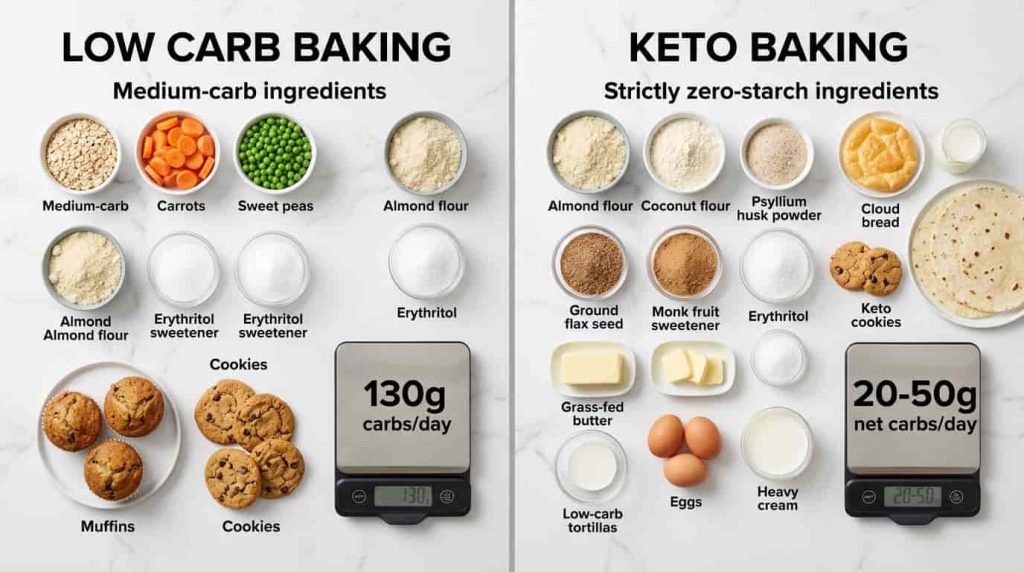
- The Low-Carb Target: A standard low-carbohydrate diet is much more forgiving. You can consume up to 130 grams of carbohydrates per day (roughly 25% to 30% of your energy intake) and still technically be “low carb”.
When you are baking keto, every single gram of carbohydrate matters. A recipe that is perfectly fine for a general low-carb dieter might completely kick a keto dieter out of ketosis.
Ingredient Differences: What Can You Actually Use?
Because of these differing carb limits, your pantry staples will look very different depending on which path you choose.
Low-Carb Allowances: If you are just doing general low-carb baking, you have a bit of a “grey area.” You might be able to incorporate small amounts of medium-starchy ingredients, such as carrots, sweet peas, or even tiny amounts of oats, provided you stay under your 130g daily limit.
Strict Keto Rules: For true keto diet baking, all grains and high-starch items are strictly on the “Avoid” list.
- No wheat, rice, quinoa, or corn.
- No traditional oats or starchy root vegetables like potatoes.
- You must rely entirely on high-fat, high-fiber, zero-starch alternatives to build the structure of your baked goods.
Flour Differences: Moving Beyond Wheat
Standard baking relies on wheat flour because it contains gluten, which provides elasticity and structure. When you remove gluten and starch, you have to get creative.
Here are the foundation flours for keto friendly baking:
- Almond Flour & Coconut Flour: These are the gold standards. They are high in fat, moderate in protein, and very low in net carbs.
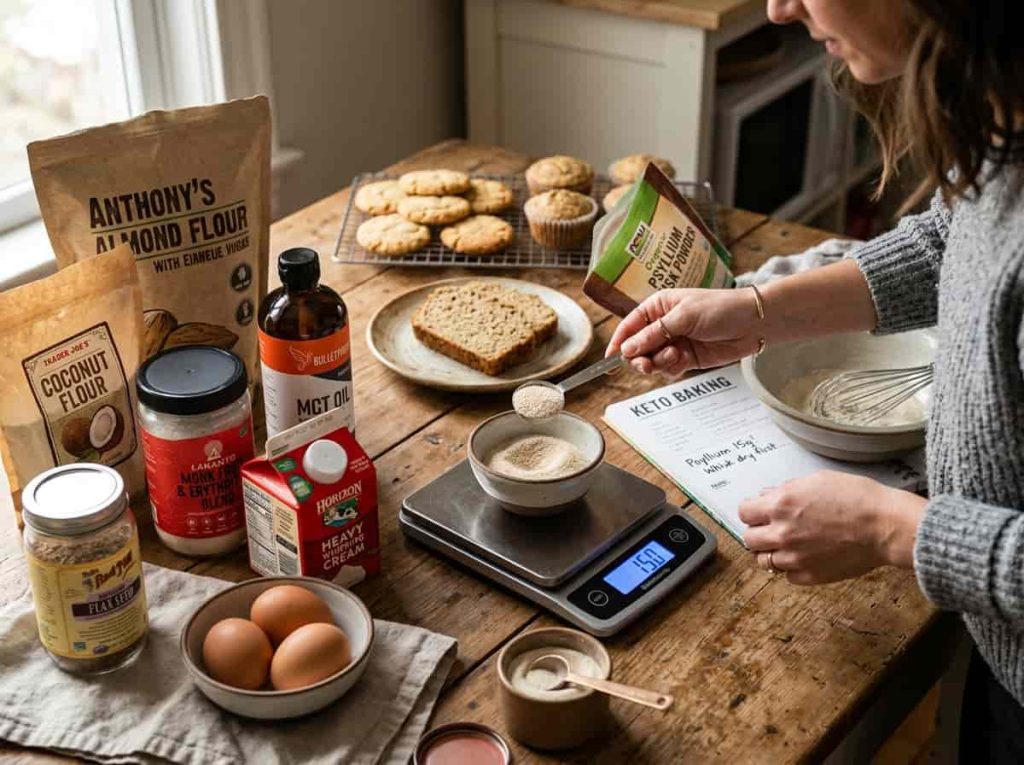
- Psyllium Husk: Since you don’t have gluten, your bread needs a binder. Psyllium husks are pure soluble fiber that mimic the chewy texture of real bread.
- Ground Flax Seed: Often used alongside psyllium, flax provides moisture and structure, making it perfect for low-carb sandwich breads and tortillas.
Sweetener Choices for Ketogenic Baking
Sugar doesn’t just add sweetness; it provides moisture, bulk, and that beautiful golden-brown color in cookies. Replacing it is the trickiest part of ketogenic baking.
- The Top Choices: Blends of Monk Fruit and Erythritol are excellent because they have a Glycemic Index of zero and measure 1:1 like sugar.
- The Browning Secret: Most keto sweeteners just melt without browning. If you want a perfectly baked cookie, look for Tagatose. It is a rare sugar that is 90% as sweet as sucrose but has a Glycemic Index of only 3, and it undergoes the Maillard reaction (browning) just like real sugar.
- What to Avoid: Never bake with Aspartame. It is not heat-stable and will completely lose its sweetness in the oven.
Which Is Easier? Flexibility vs. Strict Macros
If you are a beginner, low carb baking is undeniably easier. You have more flexibility to use pre-made low-carb flour blends that might contain a few extra carbs but behave more like traditional flour.
Baking keto, on the other hand, is a science experiment. Because coconut flour absorbs liquid like a sponge and almond flour lacks binding power, you have to follow recipes down to the exact gram. You will often rely heavily on eggs and fats (like grass-fed butter or coconut oil) to hold everything together.
Example Recipe Swaps for Baking Keto
You don’t have to give up your favorite comfort foods; you just have to swap the mechanics. Here are proven conversions based on ketogenic food guidelines:
- Instead of Oatmeal: Make “Noatmeal” by blending chia seeds, hemp hearts, and shredded coconut.
- Instead of Wheat Buns: Bake “Oopsie Bread” or cloud bread using a simple mixture of whipped egg whites, cream cheese, and cream of tartar.
- Instead of Regular Tortillas: Bake wraps using ground flax seeds and water (which binds together into a pliable dough).
FAQ
Can I use regular cow’s milk in my keto cakes?
No. Standard cow’s milk contains a high amount of lactose (milk sugar). You should swap it out for unsweetened almond milk, coconut milk, or heavy whipping cream.
Why did my keto bread turn out crumbly?
You likely lacked a binding agent. Because nut flours have no gluten, you must use ingredients like Xanthan Gum or Psyllium Husk to give the dough elasticity.
Conclusion
Ultimately, mastering low carb baking and its stricter keto cousin comes down to understanding your personal carb limits and learning how alternative ingredients behave in the oven.
If your goal is just to cut back on refined sugar, a flexible low-carb approach is a great starting point. But if you want to maintain a strict state of fat-burning ketosis, you must respect the science of keto-approved flours and zero-glycemic sweeteners.